
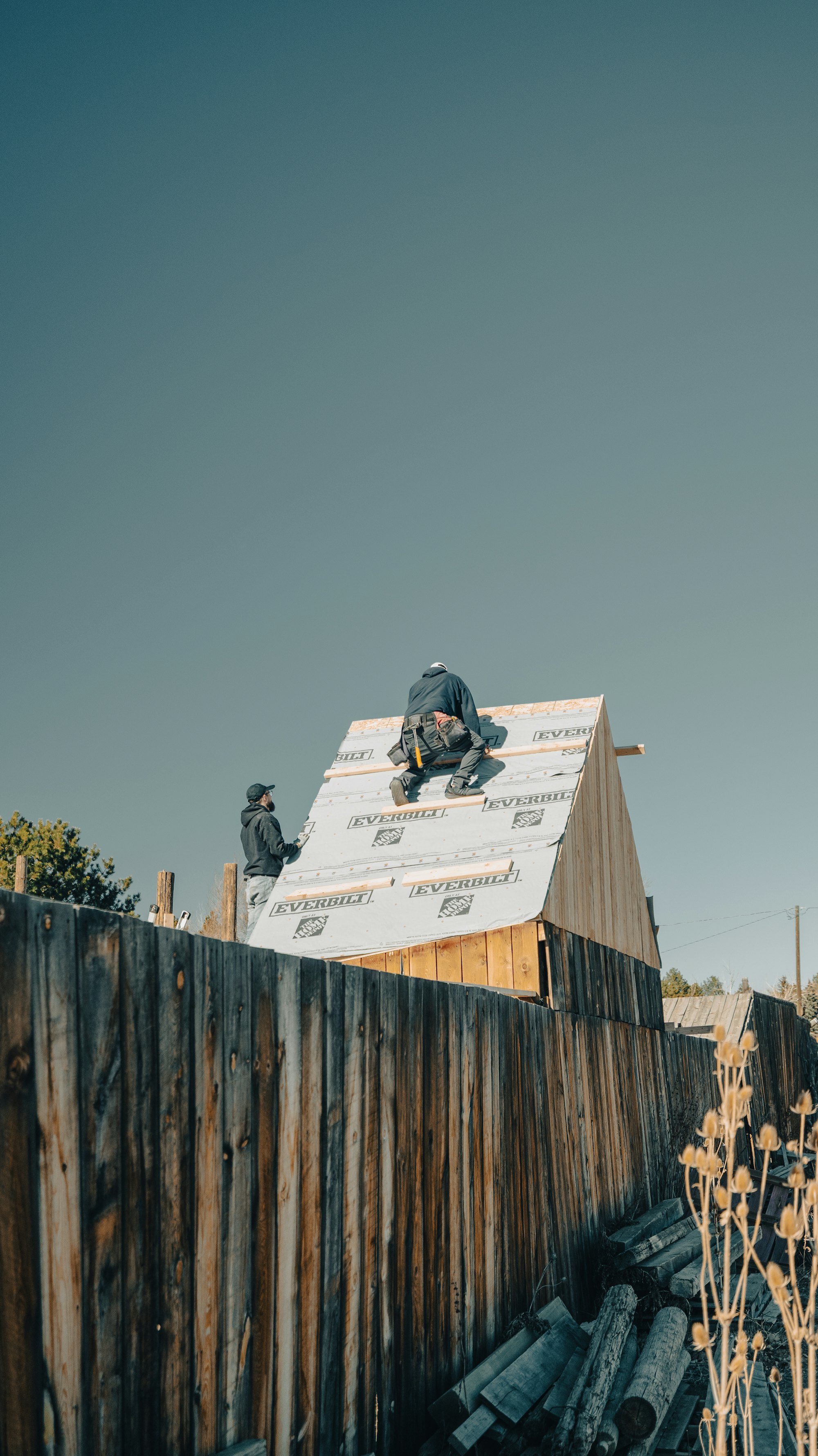
On a July afternoon in Aledo, the hottest room in the house is one nobody lives in. The sun loads the shingles, the roof deck passes that heat down into the attic, and in most Parker County homes the air handler and the supply ducts are sitting right there in it. Radiant barrier roof decking is one way to cut that heat off at the source, and whether it pays for itself depends less on the product than on the house it goes into.
A Radiant Barrier Reflects Heat That Insulation Only Slows
A radiant barrier is a sheet of highly reflective material, usually aluminum foil, that stops heat from radiating across an air gap. The U.S. Department of Energy's radiant barriers guide explains that these systems reflect radiant heat rather than absorbing it, which makes them a different tool from insulation. Fiberglass or cellulose slows heat moving through the material by conduction; a radiant barrier works on the heat that leaps from a sun-baked deck to everything below it.
That distinction has one practical consequence: the foil needs an open air space beside its shiny face to do anything. Pressed flat against another material, it conducts heat like any other sheet of metal. That is why it belongs on the underside of the roof deck, facing down into an open attic, and why it is not a substitute for the insulation lying on the ceiling below.
The Savings Are Real but Modest, and They Depend on the House
Radiant barriers save measurable cooling energy in hot, sunny climates, though the numbers are smaller than some sales pitches suggest. The DOE guide puts it plainly: some studies show radiant barriers can reduce cooling costs 5% to 10% in a warm, sunny climate, and they are more effective in hot climates than cool ones. Long, clear North Texas summers are exactly that kind of climate.
The Florida Solar Energy Center's radiant barrier primer reaches a similar place from a different direction. For a typical 1,500-square-foot Central Florida home, it notes the attic accounts for about 22 percent of the cooling load and estimates a radiant barrier could save 8 to 12 percent on annual air-conditioning costs. It also reports that a barrier blocks about 95 percent of the heat radiated down by the roof and, with R-19 ceiling insulation, can cut ceiling heat gain by more than 40 percent.
Researchers at Oak Ridge National Laboratory, in their analysis supporting the DOE radiant barrier fact sheet, stress why no single number fits every home: the benefits depend on the climate, the attic geometry, the duct arrangements and other building parameters.
Ductwork in the Attic Is What Tips the Math
Attic ductwork is the single biggest reason a radiant barrier pays off in a Texas house. The DOE guide singles out homes where cooling air ducts are located in the attic as the ones that benefit most, and FSEC notes that roof heat radiating into the attic warms ductwork and air handlers directly. Cold supply air picks up heat along every foot of attic duct before it reaches a register.
That describes plenty of homes in and around Aledo. Slab-on-grade construction leaves no crawlspace or basement for mechanical equipment, so the air handler, the plenum and the duct trunk lines go overhead. On the sprawling single-story homes common on acreage toward Annetta and Willow Park, those trunk lines run long.
To judge your own attic, look at where the equipment sits and how much duct is exposed. An air handler plus long flex runs overhead makes a strong candidate; ductwork inside conditioned space gets a much smaller return.
Radiant Barrier Sheathing Costs Little Extra When the Deck Is Already Coming Off
Radiant barrier roof decking is ordinary OSB with a thin aluminum layer laminated to one face, installed foil side down so the reflective surface faces the attic. LP's TechShield consumer brochure describes its panels as OSB with a durable aluminum layer laminated to it, says they can block up to 97 percent of radiant heat transfer through the sheathing and reduce attic temperatures by up to 30 degrees Fahrenheit, and notes that builders install it just like conventional roof sheathing. Those are manufacturer maximums, not a promise for any one attic.
The installation detail matters for cost. Because foil-faced sheathing goes down exactly like plain sheathing, the added expense when a deck is being replaced anyway is mostly the material premium over standard OSB. FSEC makes the same point, noting that foil-faced roof sheathing can significantly reduce installation costs in new construction or redecking.
The catch is that a normal reroof does not replace the whole deck. Sound sheathing stays and only damaged sections come out, and patching in a few foil-faced panels among plain ones buys very little.
When a Reroof Is the Right Moment, and When It Isn't
A full redeck is the right moment to specify radiant barrier sheathing. That situation comes up more often than people expect on older homes around Aledo:
- The old deck is spaced board sheathing from an original wood-shingle roof and needs solid sheathing before asphalt shingles go on.
- Widespread delamination or soft spots from years of small leaks mean most of the panels are coming out anyway.
- Hail damage on the last storm cycle reached through the shingles into the sheathing across several slopes.
In any of those cases, asking for foil-faced panels on the roof replacement estimate is a small line item rather than a separate project. Our roof replacement prep checklist explains why attic storage gets covered before tear-off, which matters even more when the whole deck is lifted.
When the deck is sound, tearing off good sheathing just to get foil is hard to justify. The better route is a retrofit from inside the attic: the DOE guide describes stapling radiant barrier foil to the bottoms of the rafters, which leaves the needed air gap and can be done at any time, roof replacement or not. What the same guide warns strongly against is laying foil directly on top of the attic floor insulation, where it collects dust, loses its reflectivity and can trap moisture in the insulation beneath.
Insulation, Ventilation and Dust Decide How Well It Works
A radiant barrier performs best as part of an attic that is already in reasonable shape. The DOE guide notes that in cooler climates adding more insulation is usually more cost-effective than adding a radiant barrier, and the same logic applies in a warm one when the existing insulation is badly thin or compressed.
Ventilation is the other half. FSEC reports that soffit-to-ridge ventilation improves radiant barrier performance, so a reroof that adds a barrier is also the time to confirm the intake vents at the eaves are open and the ridge or roof vents are sized to match.
Dust is the slow enemy. Foil facing up gathers dust and loses reflectivity, which is why DOE and FSEC both favor foil facing down, the way radiant barrier sheathing installs by design.
Does a cooler attic mean hotter shingles? FSEC's measurements put peak shingle temperatures only 2 to 5 degrees Fahrenheit higher with a radiant barrier, against typical summer peaks of 160 to 190 degrees.
What the Upfront Cost Looks Like Against the Payback
The cost case is strongest where the barrier is cheapest to install. FSEC's primer gave material costs ranging from about $0.07 to $1.00 per square foot and installation from $0.10 to $1.00 per square foot, with computer studies for Florida showing a six- to seven-year simple payback. Those figures are dated and come from Florida, so treat them as a sense of scale rather than a current Parker County quote.
What they do show is the shape of the decision. A retrofit pays labor to work overhead in a hot, cramped attic, so its cost sits toward the top of that range. Foil-faced sheathing on a full redeck carries almost no extra labor, so the premium shrinks to the material difference, and the payback shortens accordingly. That gap is the whole argument for raising the question before tear-off rather than after.
Settling the Question Before the Shingles Come Off
The deciding factor is not the foil, it is where your ductwork lives and whether your deck is already being replaced. If the air handler and duct runs sit in the attic and the roof needs a full redeck, radiant barrier sheathing is about as easy a yes as roofing offers. If the deck is sound, leave it, and look at a rafter-stapled retrofit alongside more insulation and better ventilation instead.
The way to find out which camp you are in is to have the deck and the attic looked at before an estimate is written. Roofing Aledo can check decking condition, ventilation and duct exposure during a roof inspection and price radiant barrier sheathing into a roof replacement when a full redeck makes sense, so the decision is made with the roof open rather than after it is closed up.
Is Your Ductwork Baking Up in the Attic?
We can check the deck, the vents and where your air handler sits, then tell you in writing whether a radiant barrier is worth adding to your next roof.
Schedule an attic and deck checkResearch Behind the Numbers
- U.S. Department of Energy, Energy Saver: Radiant Barriers
- Florida Solar Energy Center (UCF), Radiant Barriers: A Question and Answer Primer, FSEC-EN-15
- Oak Ridge National Laboratory, Analysis in Support of the Radiant Barrier Fact Sheet, 2010 Update
- LP Building Solutions, LP TechShield Radiant Barrier Sheathing consumer brochure