
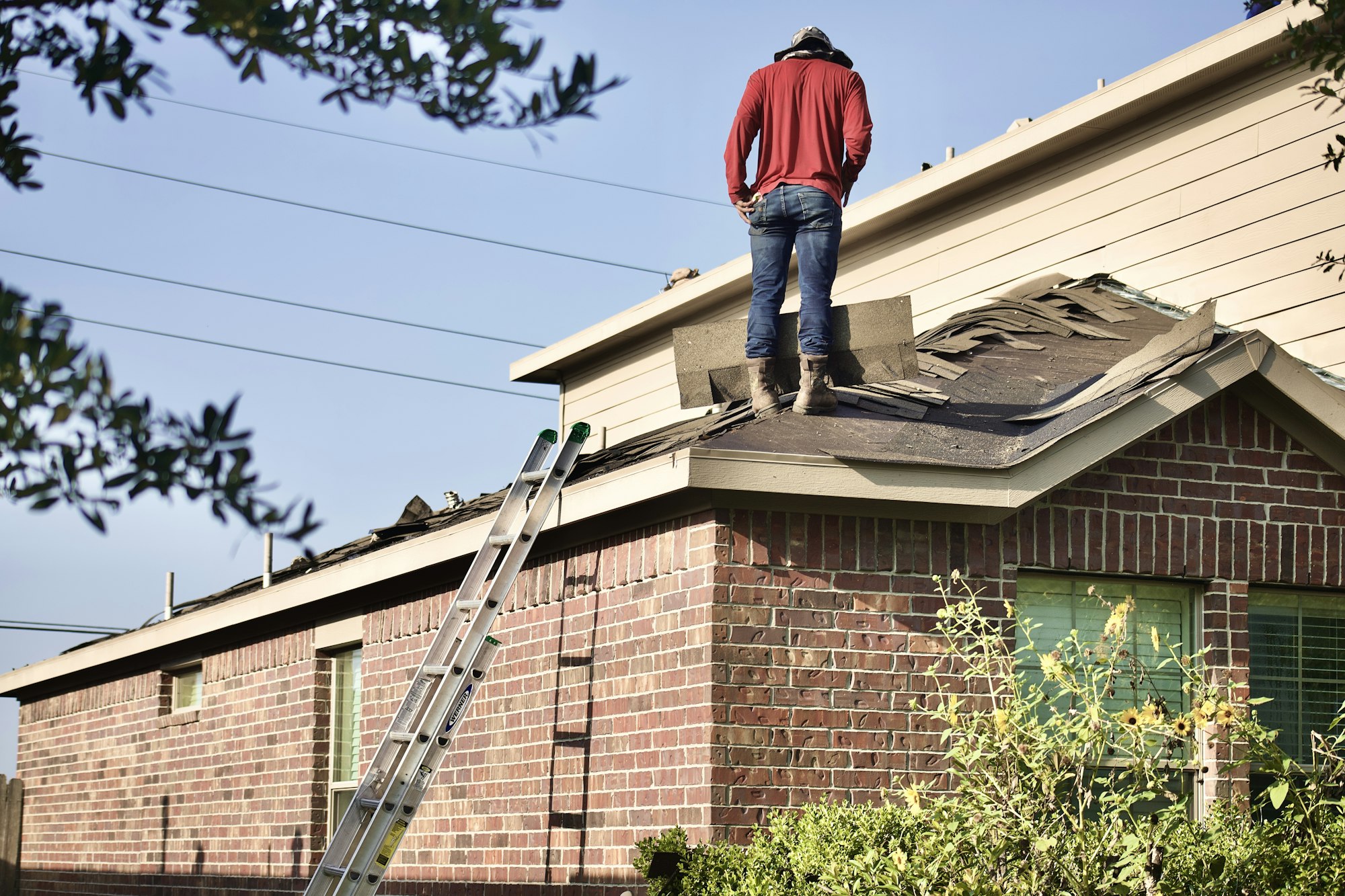
On tear-off day, the first thing most Aledo homeowners notice is the noise: flat bars and shovels working shingles loose overhead while debris slides down into a trailer parked by the house. Knowing how to prepare for a roof replacement turns that day from a scramble into a routine. The checklist below runs in the order most households tackle it, from the driveway the night before to the yard sweep once the crew is gone, with a few items that only come up on the larger Parker County lots where septic systems and long gravel drives are common.
1. Move Vehicles Out of the Driveway the Night Before
The driveway is the crew's staging area, so cars, trailers and boats should be moved out before work starts, ideally the evening before. A dump trailer or roll-off bin usually sits close to the house, and material deliveries need a clear path to the eaves. Park on the street or at a neighbor's, and pull anything you will need during the day out of the garage first, because getting a car out mid-job may mean waiting for a ladder or trailer to move.
Roofing Aledo states that its crews protect landscaping and vehicles during the job, but distance is still the best protection. Shingle granules, nails and old flashing travel farther than most people expect when a steep slope is being stripped, and a car parked two driveway lengths away is simply out of the way.
2. Cover or Clear Out What Is Stored in the Attic
Anything stored in the attic should be covered with old sheets or plastic, or moved out entirely, before the old roof comes off. Tearing off shingles and prying up damaged decking shakes loose decades of dust, insulation fibers and grit, and some of it falls through gaps between boards onto whatever sits below. Holiday decorations, keepsake boxes and spare bedding are the usual casualties.
Clearing a path to the attic hatch also helps if the crew finds soft or rotted sheathing. The roof replacement process at Roofing Aledo includes decking that is inspected sheet by sheet as it is exposed, replaced where it is soft or delaminated, and shown to the homeowner before anything new goes down. Easy attic access means a stain on the underside of the deck can be checked from inside rather than guessed at from above.
- Bag or box loose items and move them toward the center of the attic, away from the eaves where the most debris falls.
- Cover anything that cannot be moved with drop cloths, taping the edges down.
3. Take Down Wall Hangings and Fragile Shelf Items
Hammering and nail guns send vibration through the rafters and into the walls, so framed pictures, mirrors and shelf items should come down before work begins. Rooms directly under the roof feel it most: upstairs bedrooms, vaulted living rooms and any wall that runs up to the roofline. A mirror hung on a single nail can work itself loose over a long day of fastening above it.
Light fixtures and ceiling fans can rattle as well. Most will be fine, but glass shades on older fixtures are worth removing and setting aside.
4. Plan Where Pets and Children Will Be
Pets and children should spend tear-off day away from the house if possible, or inside and well away from the work zone if not. The noise is constant and loud for hours, which is hard on dogs in particular, and falling debris makes the yard unsafe while the crew is working. Dogs that normally live in the backyard need a different arrangement for the day, whether that is a kennel, a friend's house or an inside room with the radio on.
For children, the hazards are the ladder, the trailer and the debris chute, all of which look interesting from a distance. Talk through the rules the night before and pick a clear boundary, such as staying on the far side of the fence.
5. Protect Landscaping, Patio Furniture and Anything Under the Eaves
Flower beds, patio furniture, grills and potted plants near the house sit right where debris lands, so move what you can and flag what you cannot. Shrubs planted tight against the foundation are hardest to protect, and a tarp laid over them the morning of the job is often the simplest fix. Patio sets, planters and garden ornaments belong in the middle of the yard or in the garage.
Run the sprinklers a day or two early and skip the morning of the job, so the crew is not working ladders on wet ground. Mark sprinkler heads near the driveway, because a loaded trailer can crush them. If there is a satellite dish, solar equipment or holiday lighting mounted to the roof, ask beforehand how it will be handled so nothing is pulled loose without a plan.
6. Mark the Septic System and Truck Route on Acreage Lots
On rural and acreage properties, the septic tank, drain field and any soft ground along the driveway need to be marked before trucks and trailers arrive. The EPA's homeowner guidance on septic care is blunt: do not park or drive on your drainfield. A loaded dump trailer or material truck can compact the soil and crush lines that took years to settle in properly.
Private septic systems are common enough around Aledo that the Parker County Permitting Department regulates and permits on-site sewage facilities across the unincorporated parts of the county, where many acreage homes sit. If you are not sure where your lines run, the original permit paperwork or a past pumping invoice often shows a sketch.
Flag the tank lid and the edges of the field with stakes or marking paint, and tell the crew lead where heavy equipment can and cannot go. On long gravel driveways, point out any culverts, low spots or cattle guards a delivery driver should know about, and unlock any gates so material can reach the house without a phone call.
7. Confirm the Schedule, Decking Plan and Permit Question Ahead of Time
A short conversation before the job heads off most of the surprises that cause friction on the day. Confirm the start date and the weather plan, and ask how long your roof is expected to take. Roofing Aledo says most single-family roofs are finished in a day, that steep pitches, large square footage or weather can stretch the job to two, and that homeowners are told which applies before work begins. It also says crews only tear off as much as can be dried in that day.
Ask how replacement decking will be priced and approved if the crew finds bad sheets, so the decision is not being made in a hurry with the roof open. Ask who pulls any required permit as well, because the answer depends on whether the house sits inside Aledo city limits, in a neighboring city such as Willow Park or Hudson Oaks, or out in the unincorporated county.
8. Walk the Yard With a Magnet After the Crew Leaves
Loose roofing nails are the most common leftover from any replacement, and a final pass with a magnet is the last item on the checklist. Roofing Aledo states that debris is hauled away the day the job finishes and that magnetic sweeps cover the driveway, walkways and grass line around the full perimeter of the house. A second look by the homeowner over the following days is still worthwhile, because nails hide in thick grass and flower beds and work their way up after rain or mowing.
A nail in a tire is an annoyance; a nail in a foot is a medical issue. The CDC lists deep or puncture wounds, such as stepping on a nail, among the injuries that warrant a call to a healthcare provider, especially for anyone not current on the 10-year tetanus booster. Keep pets and barefoot kids off the grass near the drip line until it has been checked, and walk the driveway before the first car pulls back in.
Questions Aledo Homeowners Ask Before Tear-Off Day
Do I need to be home during a roof replacement?
You do not usually need to be home the whole day, but being reachable matters. The crew may need a decision on replacement decking or access to the attic, and a quick answer keeps the job moving. Many homeowners stay for the start, then leave once the plan for the day is confirmed.
How far ahead should I start preparing?
A week is plenty for most households. Use that time to plan for pets and kids, clear the attic and arrange somewhere to park. Leave the driveway, patio furniture and landscaping covers for the evening before and the morning of the job.
Will a roof replacement crack drywall or damage my ceilings?
Vibration from tear-off and nailing can shake loose items on walls and shelves, which is why they should come down first. Hairline cracks sometimes show up where drywall was already stressed, especially in older homes. Note any existing cracks before the job starts so you can tell new from old afterward.
What should I do if I find nails in the yard days later?
Pick them up and let the contractor know, since a missed spot is easy to recheck. A cheap rolling magnet from a hardware store makes quick work of the lawn, and checking again after the first mowing catches nails the grass was hiding.
Planning a Tear-Off This Season?
Get a line-item replacement estimate first, so the schedule, the decking plan and the cleanup are settled before anyone sets a ladder against your eaves.
Ask for a replacement estimate